German occupation of France
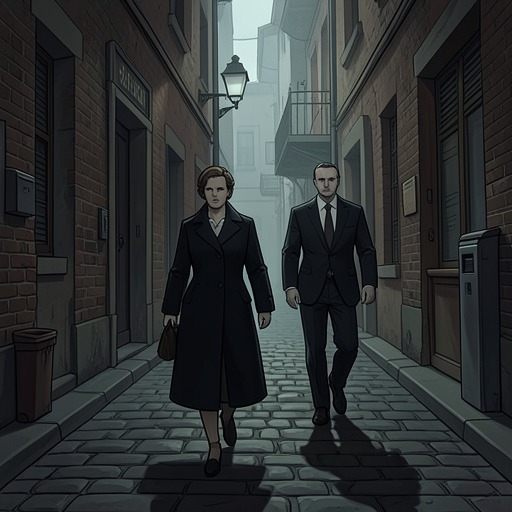
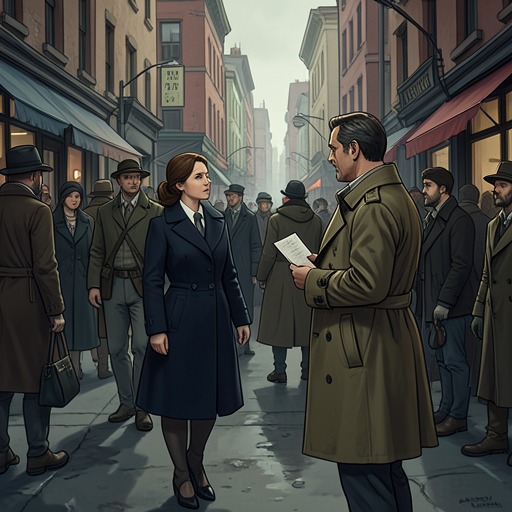
Kiss of the Spider WomanGerman occupation of France is the setting for a film-within-the-novel that Molina recounts to Valentin. Its Paris is presented through competing claims to order and patriotism: German troops march beneath occupation flags, a crowd welcomes the apparent exposure of a black-market food hoard, and a concealed truck carries provisions away under the direction of a Maquis member. Later, Leni, a French singer from Alsace, faces German police suspicion and the attentions of an officer responsible for counterespionage. The occupation is therefore not just scenery for the film’s romance and intrigue; it is the pressure that makes public loyalty, concealed resistance, and the meaning of propaganda difficult to separate.
Paris Under Occupation
The film opens in Paris a couple of months after the occupation begins. German troops pass beneath the Arc de Triomphe, while swastika flags are displayed on the Eiffel Tower and elsewhere. French women applaud the soldiers as they march. The narrated scene emphasizes the spectacle of military power, but also the crowd’s apparent willingness to welcome the new authorities. That reaction prepares the first political ambiguity: the soldiers enter a butcher shop and discover a hidden cellar filled with hoarded provisions that appear to come from the black market.
A crowd gathers outside, including housewives and working-class-looking men. They speak approvingly of the butcher’s arrest and imagine that German rule will end the exploitation of the poor. The scene makes food scarcity and profiteering a material basis for the crowd’s judgment, rather than presenting occupation as an abstraction. Yet the impression of German authority bringing relief is immediately unsettled by what happens nearby. As the soldiers leave, a truck carrying another concealed load of provisions reverses away from the area. Its passenger, who directs the driver, later reports the butcher’s arrest by telephone. He is a Clubfoot and identifies himself with the Maquis. The same scarcity that makes the crowd welcome the raid is thus part of a clandestine struggle over supplies and political control.
Resistance and Concealed Allegiances
The truck sequence complicates the apparent division between the German authorities and the people they claim to protect. The German search exposes one stockpile, but the fleeing truck carries another; its cargo is not presented as evidence of a clear moral distinction between lawful provisioning and black-market activity. What the film does establish is that the Clubfoot and his associates are involved in the Maquis, and that their work depends on concealment and rapid movement. The Clubfoot slips into a Paris bar to make his report, while the driver waits with the truck. Their actions turn the street from a public spectacle of occupation into a space of hidden networks.
The episode also places resistance inside a contested language of patriotism. The crowd interprets the German raid as a defense of the poor, while the Clubfoot’s affiliation with the Maquis reveals another organized opposition to German rule. The scene does not resolve these competing political claims through an explanatory voice; it places them beside one another, letting the concealed food and the brief telephone report expose what the cheering crowd cannot see. The occupation’s power is both visible in marching soldiers and flags and difficult to map, because allegiance and purpose remain partly hidden.
Leni and German Counterespionage
The occupation enters Leni’s life through the death of a woman known to be her friend. German police question Leni about what she knows and detain her for a few hours. She can tell them only that the woman had been in love with a German lieutenant. Because Leni is a well-known singer, a telephone order secures her release into custody so that she can perform that evening. Her public career gives her a degree of visibility, but does not remove her from police scrutiny.
After the performance, a young, high-ranking German officer approaches her in her dressing room with flowers from the Upper Palatinate, where he was born. Leni recognizes him as the officer who had watched the earlier events from a theater box. He identifies himself as the person in charge of German counterespionage in Paris and presents his visit as an apology for the morning’s treatment. At supper, he questions the mismatch between her German first name and French surname. Leni explains that she comes from Alsace and insists on her attachment to France and concern for her country under occupation. He answers with the regime’s claim that Germany is engaged in removing enemies of the peoples of Europe, including those who hide behind patriotism. The exchange makes political language part of their personal encounter: his courteous pursuit does not erase the coercive power represented by his office.
Occupation, Romance, and Unease
Leni does not accept the officer’s political explanation as a basis for trust. She barely touches the drink he orders for her, chooses a different drink, and asks ironically whether he intends to interrogate her again. He denies any such intention, but the conversation leaves their positions visibly unequal: he can arrange her release and offers transport in a chauffeur-driven limousine, while she has already been questioned and detained. Her composure remains cool, and her questions keep the earlier police encounter present even as he courts her.
Outside Leni’s home, she notices a shadow at an upstairs window that disappears. The officer fails to notice it, absorbed in her appearance; Leni, by contrast, shivers and asks him to take her away because she feels frightened about being alone. The narration does not identify the shadow or explain its purpose, so it remains an unresolved sign of danger rather than proof of a specific plot. In this episode, occupation works through both overt surveillance and private uncertainty: German police question a singer, a counterespionage officer enters her social life, and an unexplained presence unsettles the home to which she hoped to return.
Film Form and Political Reception
The Paris story reaches the reader as a spoken film narrative between two prisoners, not as an unmediated account of historical events. Molina recalls seeing the picture at a movie house in Buenos Aires’s Belgrano district, where the theater has since been demolished. His retelling dwells on staged images—the flags and marching soldiers, the butcher’s shop, the theater, and Leni’s encounters—so that political information arrives through scenes and performance. The distance between occupied Paris and the prison conversation also matters: the film gives the prisoners material to discuss when the story turns from action to interpretation.
That interpretation becomes contentious when the film’s status as Nazi propaganda is raised. The conversation acknowledges the propaganda while also debating whether a work can be admired for its craft and artistic qualities. The disagreement is not settled by the narrated episodes. Instead, the film’s polished spectacle and its representations of German authority remain in tension: the audience is shown the regime’s persuasive claim to order, but also the concealed resistance and personal unease that claim cannot contain. German occupation of France thus functions both as the film’s historical setting and as the subject of a dispute over how images can shape political judgment.